
The internet is undergoing its most significant transformation since the advent of social media. When someone asks "what is Web3," they're enquiring about a fundamental shift in how we interact with digital systems,a shift from platforms that control our data to networks where users maintain ownership. For financial professionals, compliance specialists, and serious investors navigating this landscape, understanding Web3 isn't merely about following technological trends. it's about recognizing a structural change in digital infrastructure that carries profound implications for advisory practice, regulatory compliance, and portfolio construction. Learn more with our portfolio risk analyzer. Explore more in our Web3 section.
Understanding What is Web3: The Evolution of the Internet
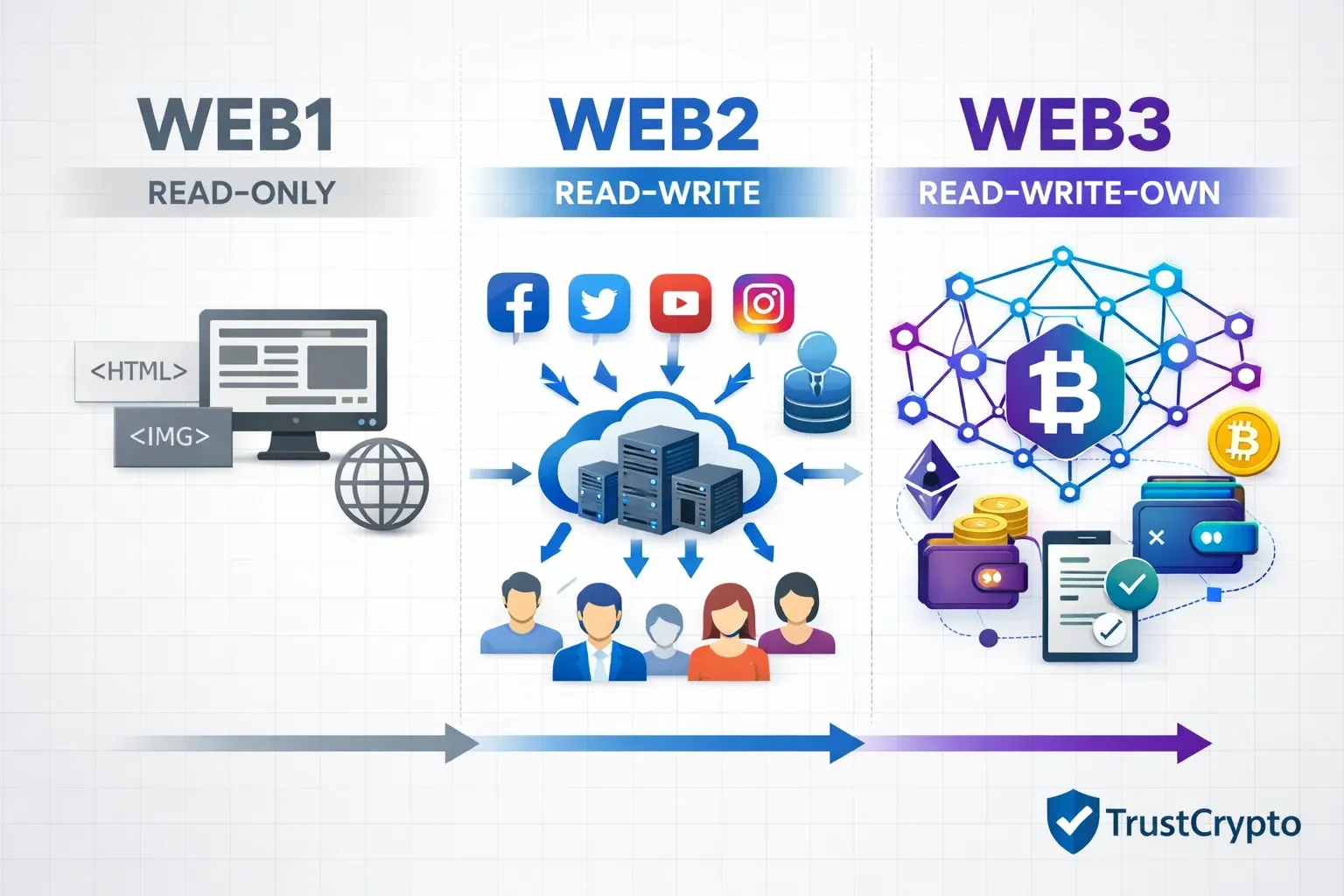
To properly answer "what is Web3," we must first understand the internet's evolutionary trajectory. The internet has progressed through three distinct phases, each characterized by different user relationships with data and platforms.
Web1 (1990-2004): The Read-Only Era
The first generation of the internet consisted primarily of static websites. Users consumed content but had limited ability to interact or contribute. Think of early corporate websites, online directories, and basic information portals. The relationship was one-directional: publishers created, users consumed.
Web2 (2004-Present): The Read-Write Era
The current iteration introduced user-generated content and social interaction. Platforms like Facebook, YouTube, and Twitter enabled anyone to create and share content. However, this convenience came at a cost: centralized corporations own user data, control algorithmic distribution, and extract the majority of economic value created by users. You create content. platforms monetize it.
Web3 (Emerging): The Read-Write-Own Era
Web3 introduces ownership as a fundamental internet primitive. Built on blockchain technology, it enables users to own their data, digital assets, and economic participation in the platforms they use. Rather than trusting Facebook to store your photos or YouTube to fairly compensate your videos, Web3 protocols encode these rights into immutable smart contracts.
The Technical Foundation: How Web3 Actually Works
At its core, Web3 relies on blockchain technology,distributed ledgers that record transactions across networks of computers rather than centralized servers. This architecture delivers three critical capabilities:
- Decentralization: No single entity controls the network, eliminating single points of failure and censorship
- Transparency: All transactions are publicly verifiable on the blockchain, creating unprecedented auditability
- Programmability: Smart contracts automatically execute agreements when conditions are met, removing intermediaries
For UK-based advisors, understanding these technical foundations is essential for FCA-compliant client communication. The Financial Conduct Authority has emphasized that crypto asset advice requires demonstrable technical competence,precisely the type of knowledge that assessment-led certification programmes like those offered by TrustCrypto Institute provide. Learn more with our crypto capital gains tax calculator. Learn more with our crypto tax calculator.
What is Web3 Solving? The Three Fundamental Problems
When evaluating any technology, professionals should ask: what specific problems does this solve? Web3 addresses three structural issues with the current internet infrastructure[5].
Problem 1: Trust and Data Security
Centralized platforms create honeypots of user data. When a single company stores millions of user records, breaches become catastrophic. Web3's decentralized architecture distributes data across networks, eliminating single points of failure. Users control their own data through cryptographic keys rather than trusting corporations to safeguard it.
Practical implication for advisors: Clients increasingly value data sovereignty. Web3 solutions offer genuine alternatives to traditional data custodianship models, particularly relevant for high-net-worth individuals concerned about privacy.
Problem 2: Creator Economy Exploitation
Current platforms extract 30-50% of creator revenue through platform fees. YouTube takes 45% of ad revenue. App stores charge 30% commissions. Web3 enables direct peer-to-peer payments and programmable royalties through smart contracts.
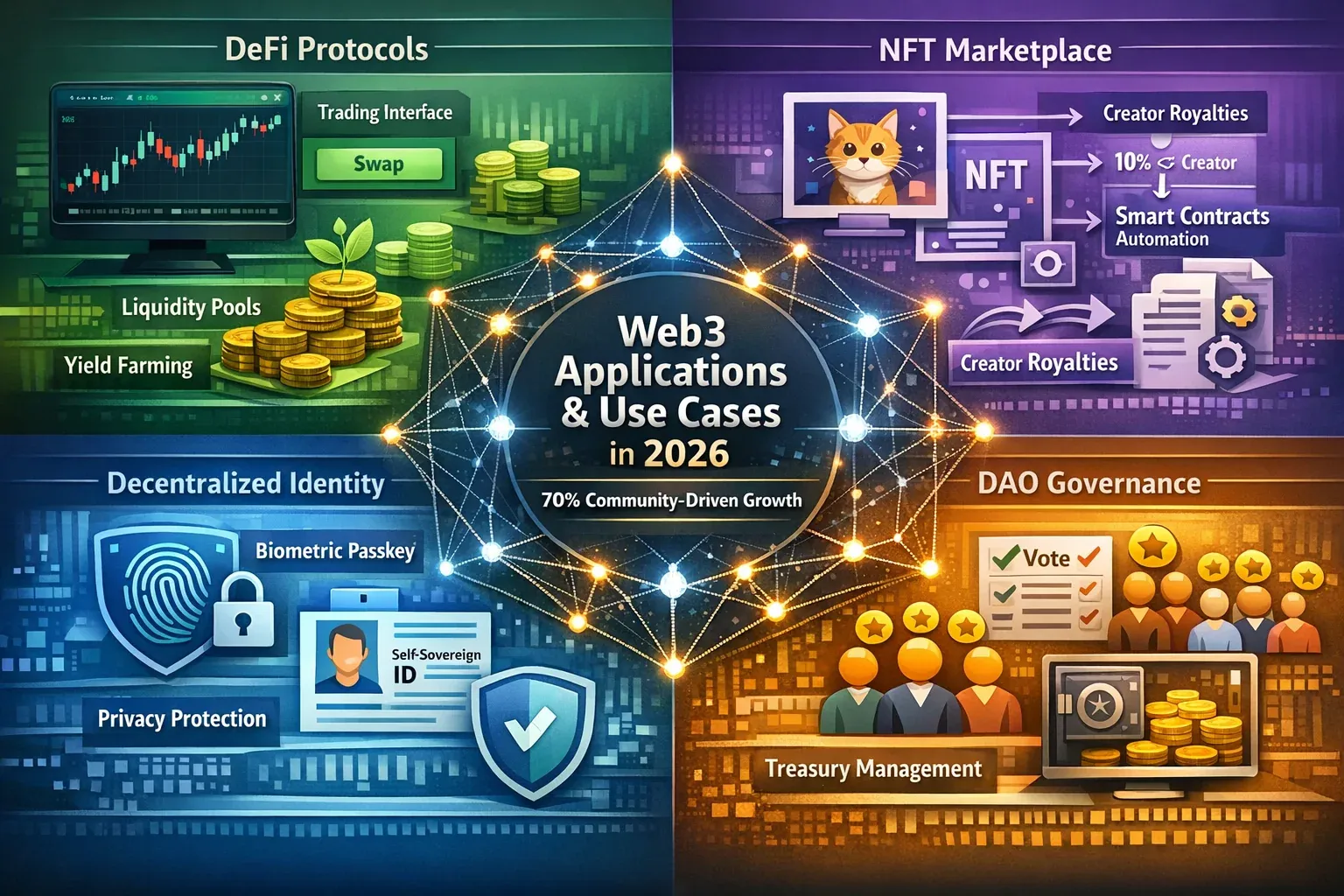
A musician can mint their album as NFTs, receiving 100% of primary sales and automatically collecting royalties on every secondary market transaction,forever. This isn't theoretical. it's functioning infrastructure in 2026[5].
Problem 3: Financial Exclusion
Approximately 2 billion people globally lack access to traditional banking services. Web3's decentralized finance (DeFi) protocols provide global market access to anyone with internet connectivity, bypassing traditional gatekeepers entirely[5].
For UK advisors working with internationally mobile clients or those with cross-border interests, understanding DeFi mechanics is becoming as essential as understanding ISAs or SIPPs.
The 2026 Web3 Landscape: From Casino to Utility
The Web3 industry has undergone a profound maturation over the past five years. The speculative excess of 2021,characterized by NFT speculation and unsustainable token economics,has given way to what industry observers call the "Utility Era"[5].
Three Dominant Forces Reshaping Web3 in 2026
Current market dynamics are driven by three interconnected trends[3]:
1. Prediction Markets
Decentralized prediction markets enable users to bet on real-world outcomes with transparent, blockchain-verified settlement. These markets are demonstrating superior accuracy to traditional polling in political forecasting and are expanding into financial derivatives and insurance products.
2. Evolution of Influencer Models
The traditional influencer-brand relationship is being disrupted by Key Opinion Consumer (KOC) models, where everyday users with smaller followings (nano-influencers) achieve engagement rates up to 5%,significantly outperforming celebrity endorsements[3].
3. User-Generated Content (UGC) Rewards
Projects are deploying tokens, airdrops, NFT-based perks, and exclusive access to reward community members who create reviews, tutorials, memes, and educational content. This strategy is projected to drive over 70% of project growth in 2026, compared to traditional marketing approaches[3].
The authenticity factor is compelling: user-generated content outperforms polished advertising by a factor of 5 in trust metrics[3]. For compliance professionals, this creates new challenges around financial promotions and the boundary between genuine community engagement and coordinated marketing.
Market Growth and Institutional Adoption
The global Web3 market is experiencing substantial momentum, with projections indicating a Compound Annual Growth Rate (CAGR) approaching 50% through 2034[5]. Critically, this growth is driven by enterprise adoption moving beyond experimental phases into production systems.
Major financial institutions are deploying blockchain infrastructure for settlement, custody, and tokenized securities. This isn't speculative positioning,it's operational infrastructure replacing legacy systems.
Web3 Tools and Infrastructure for Professionals
As of January 2026, ten major Web3 tools are actively serving creators and professionals[2]:
These tools enable direct compensation mechanisms and elimination of intermediaries,particularly valuable for YouTubers, artists, musicians, and freelancers seeking alternative revenue models beyond traditional platform economics[5].
For financial advisors, familiarity with these tools is increasingly relevant. Clients operating in the creator economy may hold significant portions of their wealth in tokenized assets, NFT royalty streams, or DAO governance tokens,all of which require specialized knowledge for proper portfolio assessment and tax treatment under HMRC guidelines.
The Professional Web3 Opportunity: Careers and Compensation
The maturation of Web3 infrastructure has created genuine professional opportunities distinct from the speculative mania of previous cycles.
Hiring Surge Signals Industry Maturity
In January 2026 alone, over 460 full-time Web3 positions were posted on major job boards[6]. Major platforms like Binance, serving 280+ million users, are leading aggressive hiring across compliance, operations, and technical roles.
This hiring pattern reflects a fundamental shift: Web3 companies are building long-term operational capacity rather than riding short-term hype cycles.
Compensation and Skill Requirements
Blockchain developers in the US are averaging $105,000 annually (approximately £87,000), with experienced professionals commanding significantly higher compensation[6]. However, technical roles aren't the only opportunity.
Marketing and community roles now require deep understanding of:
- DeFi mechanics and protocol design
- DAO governance structures
- On-chain analytics and wallet behavior
- Token economics and incentive design
For UK professionals considering career expansion into crypto advisory, these skill requirements underscore the importance of rigorous assessment and structured methodology. The baseline for professional competence has risen substantially,exactly the gap that certification pathways like TCCA (TrustCrypto Certified Advisor) are designed to address.
The Invisible Blockchain: Web3's Path to Mainstream Adoption
Perhaps the most significant development in Web3's evolution is the movement toward abstraction,making blockchain technology invisible to end users.
The 2028 Prediction: 80% Won't Know They're Using Web3
Industry analysts predict that by 2028, an estimated 80% of Web3 users won't realize they're using blockchain technology[5]. This abstraction will occur through several technical innovations:
Passkeys Replace Private Keys
Instead of managing complex cryptographic keys, users will authenticate through biometrics,fingerprints, facial recognition, or other familiar methods. The blockchain infrastructure operates in the background, invisible to the user experience.
Paymasters Handle Transaction Fees
Currently, blockchain transactions require users to hold native tokens to pay "gas fees." Emerging "gas station" infrastructure allows third parties (paymasters) to sponsor these fees, creating experiences identical to traditional apps[5].
Account Abstraction
This technical advancement enables smart contract wallets with features like social recovery (regaining access through trusted contacts), batched transactions, and automated approvals,all while maintaining the security benefits of blockchain architecture.
For advisors, this trend is critical to understand: clients will increasingly hold Web3 assets and use Web3 services without recognizing them as such. The technology becomes infrastructure rather than product,similar to how consumers use TCP/IP protocols daily without understanding networking architecture.
Regulatory Considerations and Professional Standards
The UK regulatory environment for crypto assets continues to evolve rapidly. The Financial Conduct Authority has implemented comprehensive financial promotion rules requiring that crypto marketing be "clear, fair, and not misleading."
FCA Compliance for Web3 Advisory
For professionals offering Web3-related advice, several regulatory considerations are paramount:
Qualification Requirements
The FCA expects advisors to demonstrate appropriate qualifications and technical competence. Generic financial planning credentials are insufficient for crypto-specific advice,specialized knowledge is required.
Risk Disclosure
Web3 investments carry distinct risks: smart contract vulnerabilities, protocol governance risks, regulatory uncertainty, and extreme volatility. Proper risk disclosure isn't merely regulatory compliance,it's ethical practice.
Client Categorization
Understanding whether clients qualify as retail, professional, or high-net-worth individuals affects permissible advice and promotional communications.
TrustCrypto Institute's assessment-led certification approach directly addresses these regulatory requirements, providing verified credentials that demonstrate competence to both clients and regulators. In an environment where the FCA has emphasized professional accountability, certification provides institutional credibility that protects both advisors and their clients.
Future-Proofing: Quantum Resistance and Long-Term Considerations
Professional advisors must think beyond current technology to emerging threats and opportunities.
Quantum Computing Threat
By 2030, Web3 development companies are expected to transition to quantum-resistant cryptographic standards[5]. Current encryption methods could theoretically be broken by sufficiently advanced quantum computers.
Implication for advisors: Smart contracts and blockchain protocols written today need upgradeable architecture to survive potential quantum computing threats. When evaluating Web3 projects for client portfolios, protocol upgradeability and governance mechanisms become critical assessment criteria.
Continuing Professional Development
The rapid pace of Web3 evolution demands ongoing education. What constitutes best practice in 2026 may be obsolete by 2028. Professional development isn't optional,it's essential for maintaining competence.
This reality underscores the importance of CPD requirements and continuing education frameworks. Standards-based certification bodies provide structured pathways for maintaining current knowledge as the industry evolves.
Practical Next Steps for Professionals
Understanding what is Web3 conceptually is merely the starting point. For professionals seeking to serve clients effectively in this space, several concrete actions are warranted:
For Aspiring Crypto Advisors
- Pursue recognized certification: Credentials like TCCA provide structured learning pathways and regulatory credibility
- Develop technical literacy: Understanding blockchain fundamentals, smart contract mechanics, and DeFi protocols is non-negotiable
- Master UK-specific regulations: FCA guidance, HMRC tax treatment, and financial promotion rules require specialized knowledge
- Build practical experience: Interact with Web3 protocols directly,set up wallets, execute transactions, participate in DAOs
For Compliance Professionals
- Specialize in crypto compliance: The TCCS (TrustCrypto Certified Specialist) certification addresses advanced compliance topics
- Monitor regulatory developments: FCA policy statements, HM Treasury consultations, and international regulatory coordination require continuous attention
- Develop internal frameworks: Create clear policies for crypto asset handling, custody, and advisory within your organization
- Establish risk assessment protocols: Web3 introduces novel risks requiring updated due diligence procedures
For Serious Investors
- Seek qualified advisors: Use verified advisor directories to identify professionals with demonstrated competence
- Understand tax implications: HMRC treatment of crypto assets is complex and evolving,specialist advice is essential
- Adopt cycle-aware strategies: Web3 markets exhibit extreme volatility. long-term perspective and disciplined rebalancing are critical
- Prioritize security: Self-custody requires technical competence. custodial solutions require careful provider selection
Conclusion: Web3 as Infrastructure, Not Ideology
The question "what is Web3" is best answered not through ideological frameworks about decentralization, but through pragmatic assessment of technological capabilities and real-world applications.
Web3 represents a fundamental shift in internet architecture,from centralized platforms controlling user data to decentralized protocols enabling user ownership. This shift addresses genuine problems: data security, creator exploitation, and financial exclusion. The technology has matured from speculative excess to production-grade infrastructure, with institutional adoption accelerating and professional opportunities expanding.
For UK financial professionals, Web3 is neither a passing fad to ignore nor a revolutionary panacea to embrace uncritically. It's an evolving technological infrastructure requiring serious professional engagement, rigorous standards, and evidence-based assessment.
The professionals who will thrive in this environment are those who combine technical competence with regulatory knowledge, ethical practice with commercial acumen, and healthy skepticism with genuine openness to innovation. These are precisely the qualities that professional standards bodies exist to cultivate and verify.
As the technology becomes increasingly invisible,abstracted behind familiar user experiences,the need for qualified professionals who understand the underlying architecture only intensifies. Clients will need advisors who can navigate this complexity, regulators will demand demonstrated competence, and the industry will reward those who prioritize substance over speculation.
The baseline for professional crypto knowledge is rising. The question for UK financial professionals isn't whether to engage with Web3, but how to do so with the competence, ethics, and accountability that clients deserve and regulators demand.
Standards matter. Credentials matter. Professional development matters.
The decentralized internet is being built today. The professionals who will serve it effectively are being trained and certified now.
References
[1] Latest Blockchain News January 2026 - https://stakely.io/blog/latest-blockchain-news-january-2026
[2] Watch - https://www.youtube.com/watch?v=pLjegxuRUvo
[3] binance - https://www.binance.com/en/square/post/35299979696697
[4] 10 Web3 And Crypto For Good Trends To Watch In 2026 - https://www.cryptoaltruists.com/blog/10-web3-and-crypto-for-good-trends-to-watch-in-2026
[5] Top Web3 Companies 2026 - https://pixelplex.io/blog/top-web3-companies-2026/
[6] Web3 Hiring Trends January 2026 The Talent Rush Crypto Jobs Market - https://www.cryptorecruit.com/news/web3-hiring-trends-january-2026-the-talent-rush-crypto-jobs-market/
[7] Crypto Market Recap January 2026 - https://cryptorank.io/insights/reports/crypto-market-recap-january-2026
[8] Top 5 Cryptos To Watch In January 2026 - https://wazirx.com/blog/top-5-cryptos-to-watch-in-january-2026/
Take the Next Step
Ready to advance your crypto expertise? Explore our TCCS certification to enhance your professional credentials.